 On April 26-27, the 3rd Annual USA Science and Engineering Festival took over the Walter E. Washington Convention Center in Washington, D.C. Over 325,000 people came out to celebrate discovery and innovation through over 3,000 hands-on activities and 150 performances and lectures. Sneak Peek Friday alone (Apr 25) included more than 40,000 students, teachers, military families, government officials and press. Saturday and Sunday brought in roughly 140,000 people each day. The Festival is the largest science, technology, engineering, and mathematics (STEM) education event of its kind in the United States.
The Society of Amateur Radio Astronomers (SARA) attended for the first time. SARA's booth #2061 was located in Hall B, next to ARRL (Amateur Radio Relay League) and close to ATK (Aliant Techsystems Inc). SARA has been represented by the following volunteers: Tom Crowley, Stephen Tzikas, Jim Thieman, Ken Redcap, Lee Alvis, and Chip Sufitchi.
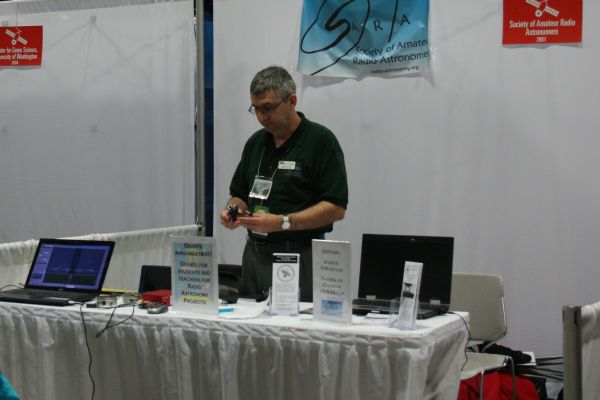
The SARA representatives greeted high school and college students, teachers and other outreach coordinators, ham radio operators, and a large audience with a scientific interest. The SARA table featured brochures on the organization, sponsored programs, its grants, as well as a SuperSID unit, a Stanford SID Monitor, laptops for visualization of results, Software Defined Radio (SDR) sticks, an Arduino microcontroller board, and a Raspberry Pi microcomputer. The latter two received a lot of interest from "techies" who knew what they were but didn’t know that they could be used for radio astronomy applications.
Some images recorded around SARA's booth
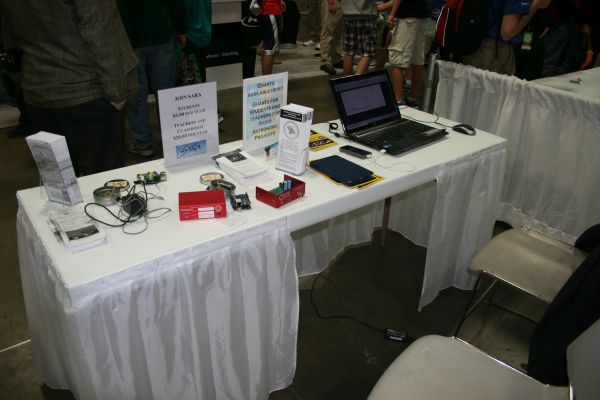
The SARA booth #2061
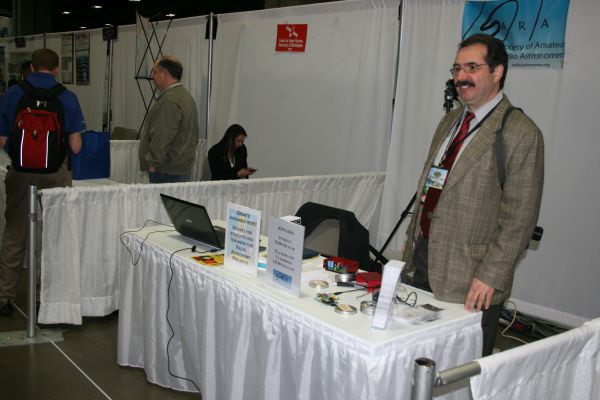
Stephen Tzikas
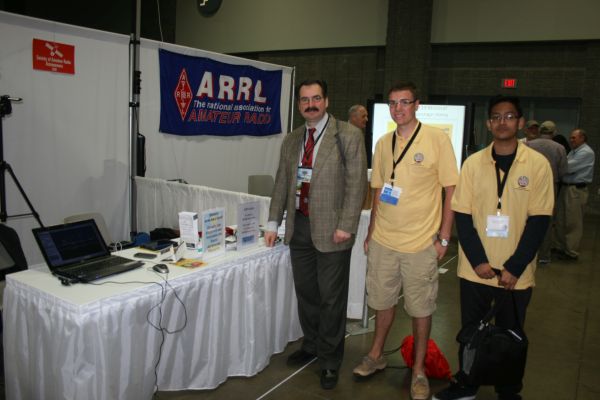
From left: Stephen Tzikas, Anthony Bisulco (a SARA Grant student) and his friend
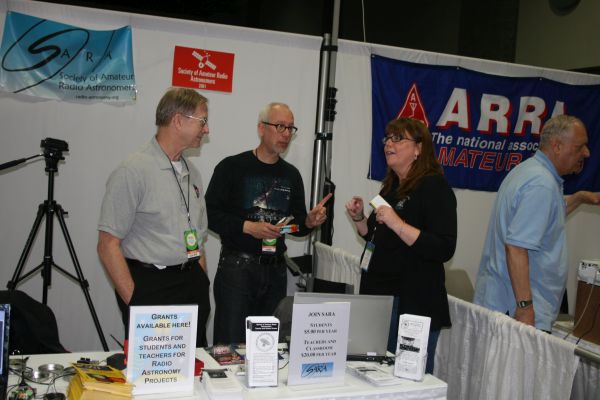
From left: Jim Thieman, Ken Redcap, Lee Alvis
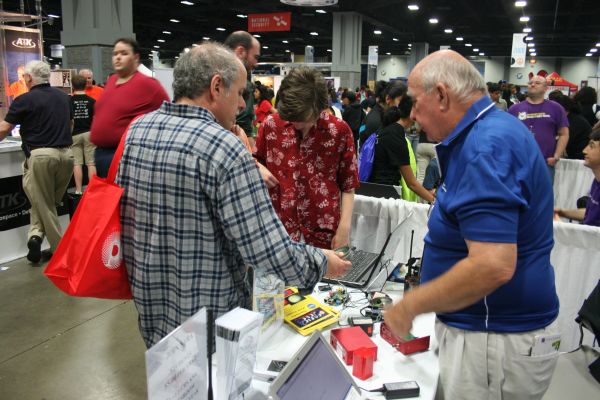
Tom Crowley (right)
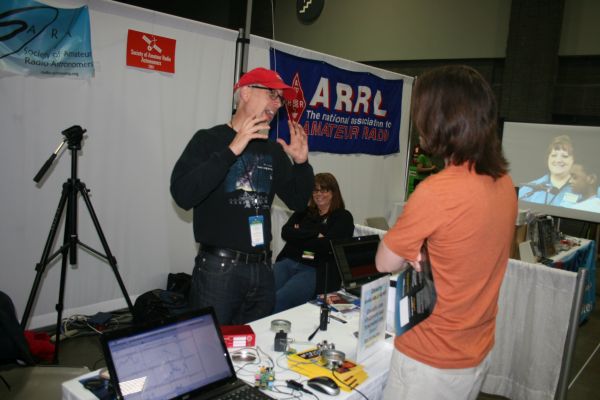
Ken Redcap demonstrating radioastronomy
Ciprian "Chip" Sufitchi
Chip Sufitchi